Toddlers are little explorers. They learn by crawling, touching, squeezing, tasting, shaking, stacking, and knocking things down. Every small action they make is actually helping the brain grow. One of the most effective ways to support this growth is sensory play. It might look simple, a toddler scooping rice, splashing water, or poking playdough, but deep inside the brain, something powerful is happening.
Sensory play builds neural connections, strengthens thinking skills, supports emotional regulation, and helps toddlers understand how the world works. In this blog, you’ll learn exactly how sensory play impacts toddler brain development and why it should be part of everyday life.
What Is Sensory Play in Toddlerhood?
Sensory play is any activity that stimulates one or more of your toddler’s senses:
-
Touch
-
Sight
-
Hearing
-
Taste
-
Smell
-
Movement
-
Body awareness
Toddlers are naturally sensory-driven. They learn concepts through action, not explanation. This makes sensory play one of the most age-appropriate learning tools.
Examples include:
-
splashing water
-
sorting colorful objects
-
squeezing playdough
-
listening to different sounds
-
walking barefoot on grass
-
playing with sand, foam, or mud
These activities activate the sensory systems toddlers need for thinking, motor coordination, communication, and emotional understanding.
Why the Toddler Brain Needs Sensory Input
A toddler’s brain grows faster during the first three years than at any other time in life. Sensory experiences help organize this rapid development.
During sensory play, the brain forms neural pathways, connections between brain cells, that support:
-
problem-solving
-
language
-
attention
-
emotional awareness
-
memory
-
motor control
The more varied sensory input a toddler receives, the richer and stronger these connections become.
The Science Behind Sensory Play & Brain Development
Understanding the brain’s structure helps explain why sensory play is so effective.
1. Strengthening Neural Pathways
Every new texture, sound, movement, and sensation stimulates the brain. When toddlers repeat sensory activities, pouring water, squishing dough, feeling sand, these neural pathways become stronger and more efficient. This is the foundation of learning.
2. Supporting the Prefrontal Cortex
The prefrontal cortex controls decision-making, impulse control, and problem-solving. Sensory activities help toddlers practice these skills naturally by experimenting and exploring without fear.
3. Enhancing the Parietal Lobe
This part of the brain interprets sensory information like touch and spatial awareness. Sensory play sharpens the parietal lobe’s ability to process physical sensations.
4. Stimulating the Brain’s Motor Regions
Whether toddlers are scooping, pouring, stacking, or pushing objects, sensory play strengthens the areas responsible for fine and gross motor skills.
5. Improving Communication Between Brain Hemispheres
Cross-body movements such as reaching, crawling, or grasping stimulate integration between the left and right brain. This leads to better coordination and cognitive flexibility.
How Sensory Play Supports Cognitive Development
The thinking skills toddlers develop through sensory exploration form the basis of higher learning.
1. Problem-Solving Skills
Activities like pouring water between containers or figuring out how to scoop rice teach toddlers how to think logically.
2. Early Scientific Thinking
Toddlers learn cause and effect through sensory play. “When I pour this, it fills.” “When I push this, it falls.”
3. Improved Attention Span
Engaging sensory tasks help toddlers practice focusing on a single activity for longer periods.
4. Early Math & Spatial Reasoning
Through sensory play, toddlers naturally learn concepts like:
-
bigger vs smaller
-
empty vs full
-
in vs out
-
up vs down
-
patterns
-
quantities
It becomes the foundation for math readiness.
5. Memory Building
Repetitive sensory experiences create strong memory connections. Toddlers start to recognize textures, sounds, shapes, and patterns.
How Sensory Play Supports Language Development
Language grows when toddlers interact with interesting sounds, textures, movements, and objects.
1. Vocabulary Expansion
During sensory play, toddlers learn descriptive words such as:
-
soft
-
rough
-
sticky
-
loud
-
cold
-
wet
-
smooth
2. Encouraging Communication
When toddlers explore new materials, they are more likely to ask questions, name objects, or express feelings.
3. Strengthening Listening Skills
Sound-based activities—shakers, tapping, pouring—help toddlers distinguish between different noises.
4. Improving Social Interaction
If sensory play happens with a caregiver or peers, toddlers learn turn-taking, sharing, and simple conversation.
How Sensory Play Supports Emotional Development
Toddlerhood is full of big emotions. Sensory play helps toddlers regulate and understand these feelings.
1. Calming the Nervous System
Soft textures, water play, and rhythmic movements soothe toddlers and reduce stress.
2. Building Independence
During sensory activities, toddlers explore freely without strict instructions. This boosts confidence.
3. Expressing Emotions Safely
Messy play helps release frustration and energy without negative consequences.
4. Supporting Sensory Processing
Toddlers learn to interpret sensory input—such as noise, texture, or movement—so they feel more comfortable in different environments.
5. Developing Patience
Activities like filling cups, gathering items, or waiting for ice to melt teach patience naturally.
How Sensory Play Supports Motor Development
Motor skills are essential for everything toddlers do—walking, climbing, feeding themselves, drawing, and dressing.
1. Fine Motor Strength
Squeezing playdough, transferring objects, picking up small items, or pouring strengthens finger muscles and hand coordination.
2. Gross Motor Skills
Running through a sensory path, carrying buckets of water, or crawling across textured surfaces engages larger muscle groups.
3. Hand-Eye Coordination
Transferring materials, scooping, stacking, or threading beads improves coordination and prepares toddlers for writing later.
4. Sensory Balance & Body Awareness
Activities involving movement help toddlers learn how their bodies move in space.
Creative Sensory Play Ideas for Toddler Brain Development
Below are easy, development-boosting activities you can set up at home or outdoors.
1. Water Pouring Station
Use cups, bottles, funnels, and spoons. Toddlers learn:
-
volume
-
control
-
focus
-
cause and effect
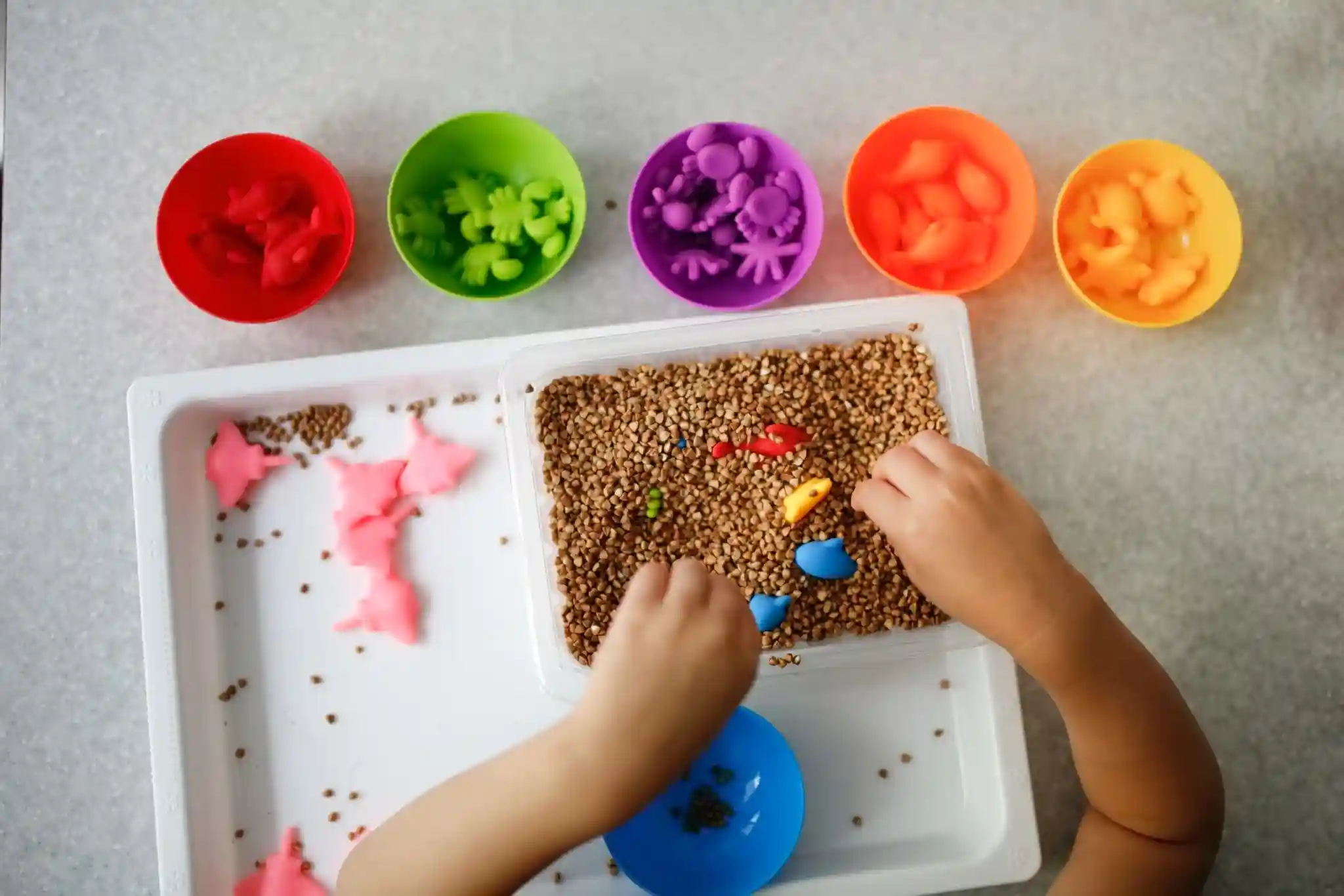
2. Sensory Rice Bin
Fill a bin with rice and add scoops, cups, and small toys. This encourages:
-
fine motor skills
-
imaginative play
-
sensory exploration
3. Playdough and Clay Exploration
Let toddlers squeeze, roll, press, and shape soft dough. This builds hand strength and creativity.
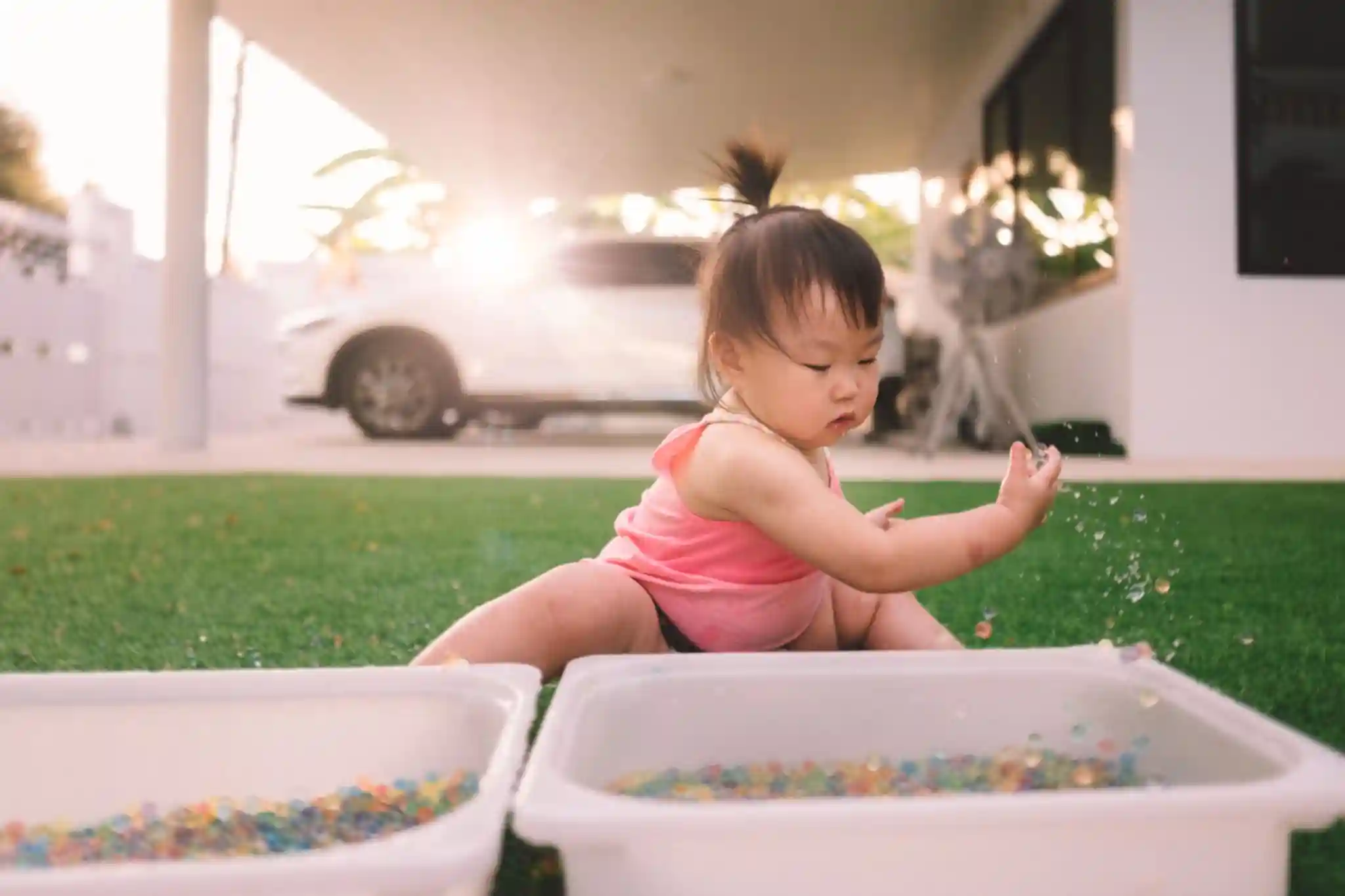
4. Nature-Based Sensory Play
Outdoor materials like grass, leaves, sand, and stones provide rich sensory experiences. Toddlers learn texture, sound, weight, and natural patterns.
5. Bubble Play
Blowing, chasing, and popping bubbles improves:
-
balance
-
coordination
-
visual tracking
6. Ice Cube Play
Freeze small toys in ice, or offer plain ice cubes to explore. This introduces toddlers to temperature and melting.
7. Sensory Paths at Home
Create a walking path with pillows, mats, bubble wrap, and soft blankets. This enhances body awareness and movement.
8. Sound Discovery Boxes
Fill containers with beads, rice, or bells and shake them. Toddlers learn sound differences and rhythm.
9. Foam and Soapy Play
Foam provides a gentle sensory experience that encourages creativity and relaxation.
10. Taste-Safe Activities
For younger toddlers, edible materials like oats or yogurt paint allow safe exploration.
How Sensory Play Helps Toddlers Prepare for Preschool
Early sensory exposure prepares toddlers for structured learning environments.
They learn to:
-
sit longer during activities
-
follow simple instructions
-
explore new textures without fear
-
communicate needs
-
play cooperatively
-
use hands effectively for writing readiness
These are key school-readiness skills.
Common Myths About Sensory Play
Many parents worry about sensory play because of misunderstandings. Here are some myths:
1. “Sensory play is only about messy activities.”
Sensory play can be clean, like sound boxes, textured books, or water painting.
2. “It takes too much time to set up.”
Most sensory activities take less than 5 minutes to prepare.
3. “It’s just play, not learning.”
Sensory play is one of the strongest forms of early learning.
4. “My toddler gets overwhelmed easily, so sensory play isn’t good.”
Sensory play actually helps sensory-sensitive toddlers understand and process input safely.
FAQs
1. How often should toddlers engage in sensory play?
Daily exposure is ideal, even if it’s only for 10–15 minutes.
2. Can sensory play help toddlers with speech delays?
Yes. Sensory play provides vocabulary, encourages expression, and helps language develop naturally.
3. What if my toddler dislikes certain textures?
Introduce new sensations slowly. Let them watch first, touch lightly, and explore at their own pace.
Conclusion
Sensory play is one of the most important experiences you can offer a toddler. It strengthens the brain, supports emotional growth, improves language, builds motor skills, and shapes how a child interacts with the world. The activities don’t need to be complicated. The simplest sensory experiences, water, sand, textures, sounds, create the strongest developmental benefits.
When toddlers explore with their senses, they build confidence, curiosity, and resilience. Sensory play gives them the foundation they need for learning, creativity, and healthy brain development throughout childhood and beyond.